


Welcome to the Global PAH programme

The Global Potentially Avoidable Hospitalisations programme, initiated and funded by AstraZeneca, brings together research and expert perspectives to explore how health systems can help reduce potentially avoidable hospitalisations. 

The programme offers evidence and recommendations to support holistic health-system reform and optimise the use of guideline-directed medical therapy (GDMT).

Illustration of a Connected Healthcare System Showing Relationships Between Chronic Conditions, Organ Health, and Potentially Avoidable Hospitalisations

Chronic conditions are contributing to a growing 
number of potentially avoidable hospital admissions

  • Icon Representing the Projected Rise in Chronic Condition Cases

    31% rise

    in the number of chronic condition cases by 20501Organisation for Economic Co-operation and Development, 2026.

  • Icon Representing Older Adults Living with Chronic Health Conditions

    Over 60%

    of older adults have more than one chronic condition2 Organisation for Economic Co-operation and Development, 2025.

  • Icon Representing the Projected Reduction in Gross Domestic Product Due to Chronic Conditions

    4% reduction in GDP

    by 2050 due to
chronic conditions1 Organisation for Economic Co-operation and Development, 2026.

Complete uptake of guideline-directed medical
therapy could lead to

  • Icon of a Human Head Representing Primary-Cause Hospitalisations Potentially Avoided Each Year

    32.3%

    of primary-cause hospitalisations potentially avoided each year
(5 conditions, 6 countries)

  • Hospital Icon Representing Potentially Avoidable Hospitalisations

    114.8 million

    bed days avoided
(5 conditions, 6 countries over 10 years)
  • Icon Representing Rising Hospital Costs Associated with Chronic Conditions

    US$36.2 billion

    of productivity protected (5 conditions, 6 countries over 10 years)

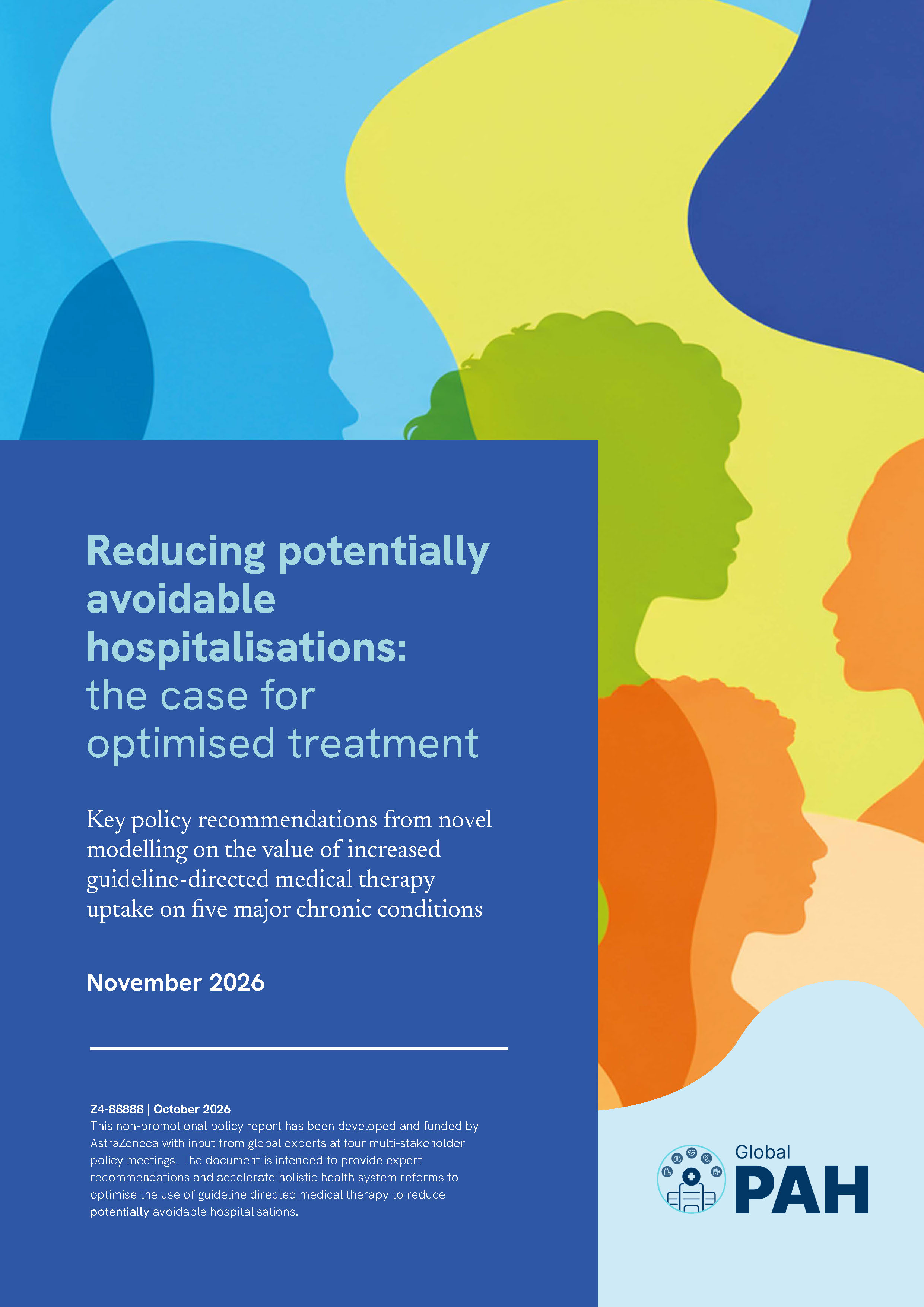
Featured Image - Policy Report

Featured policy report

Reducing avoidable hospitalisations: the case for optimised treatment

Discover key policy recommendations informed by novel modelling of how increased adoption of GDMT could help reduce avoidable hospitalisations across five major chronic conditions.

Our Steering Committee

Guided by global expertise

The Global PAH Study is guided by an independent, multidisciplinary Steering Committee of 12 experts in clinical care, health policy, academia and patient advocacy. Steering Committee members reviewed the study’s modelling approach and helped shape the recommendations presented in the policy report.


  • Portrait of Katherine de Bienassis, Steering Committee Member

    Katherine de Bienassis

  • Portrait of Dr Stephen Greene, Steering Committee Member

    Dr. Stephen Greene

  • Portrait of Gundula Koblmiller, Steering Committee Member

    Gundula Koblmiller

  • Portrait of Kelly Saldana, Steering Committee Member

    Kelly Saldaña